Something Big Is Happening
A response to Matt Shumer. Not a rebuttal. A continuation.

I read Matt’s article (one of the most popular articles on X this week) and, yeah, he’s kind of right. The technology is real, it’s moving fast, and most people aren’t paying enough attention. I’m not going to argue with any of that.
But things are a bit more complicated than a warning.
And this isn’t AI hype talking. I’m a designer, not an engineer. I don’t work at an AI lab. But I’ve been watching what’s happening with video models, with generative content, with the stuff that’s quietly reshaping how people experience reality online, and it’s not a future thing. It’s a right-now thing.
The article tells you what’s coming. It doesn’t really ask what it means. What happens to meaning when work disappears? Where do the new jobs come from? What do we actually do with ourselves once the panic wears off? I couldn’t stop arguing with it in my head, so I started writing instead. This is where I ended up.
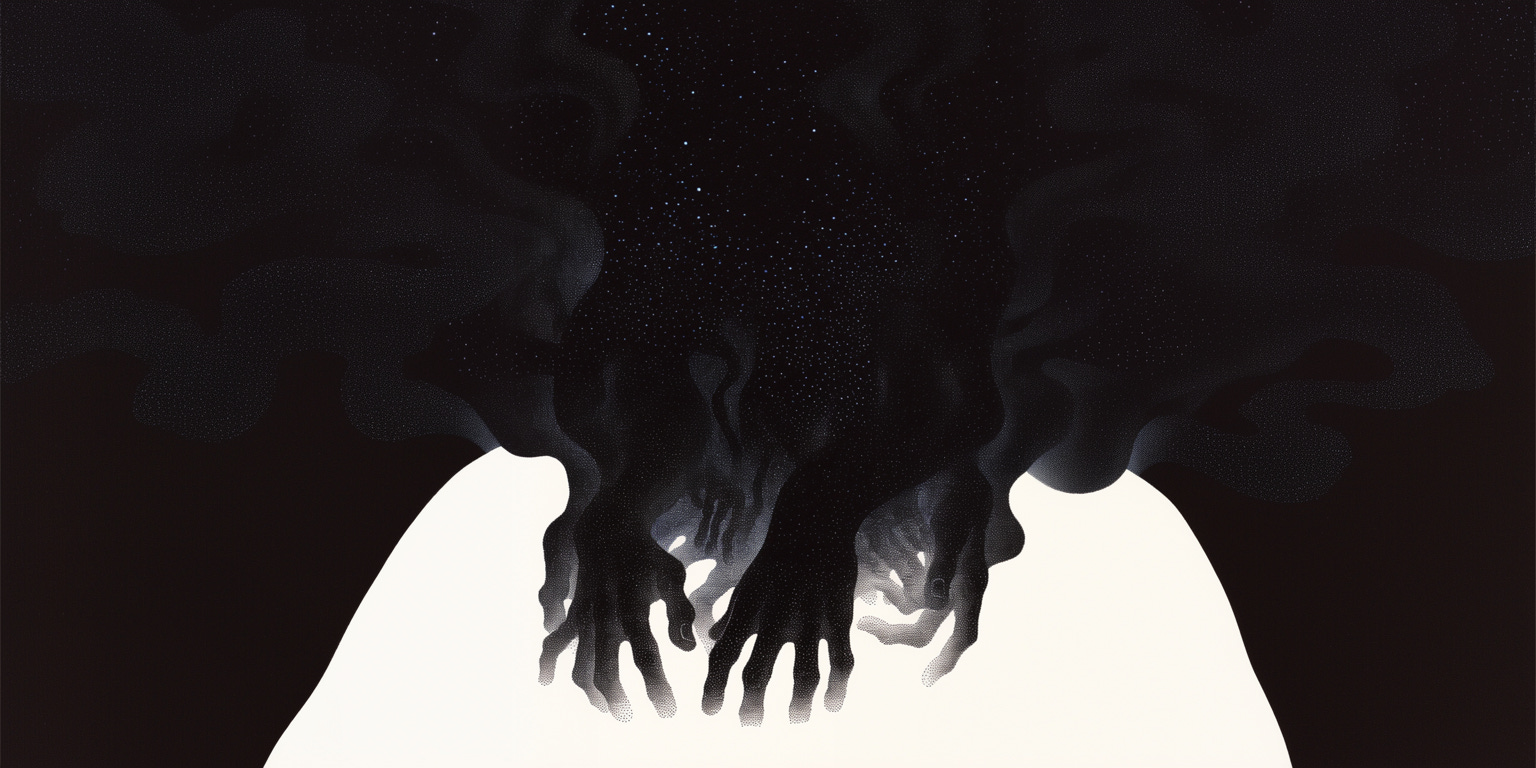
Not a threat. Freedom.
There’s a question underneath all the AI panic that nobody wants to sit with: if a machine can do your job, what was your job actually worth to you?
Not financially. I mean — did you love it? Was it yours? Or was it just the thing you did because the economy told you to?
Aristotle thought about this, weirdly enough. He imagined a world where instruments could do their own work and figured, great — then we wouldn’t need servants. He saw automation as freedom. Not a threat. Freedom. We went a different direction. We spent two centuries building a system where your career is your identity, your salary is your worth, and the question “what do you do?” is really the question “who are you?” And now the machine does it better, and it turns out the panic isn’t really about the work at all. It’s about the paycheck and the identity wrapped around it.
That’s not a tech problem. That’s a philosophy problem. And we have almost nobody working on it.
I mean that literally. We have thousands of engineers building AI and almost no one thinking seriously about what we’re building it for. What does a good life look like when work is optional? What does society owe people in the middle of a disruption this fast? What does it mean to be human when the stuff we thought made us special turns out to be automatable?
These aren’t abstract questions anymore. They’re the most urgent questions alive. And if you’re the kind of person who feels pulled toward that — toward meaning, toward ethics, toward the big “where are we going” stuff — I’d argue the world needs you more right now than it needs another software engineer.
Because the technology is going to keep getting better whether or not we sort the philosophy out. And if we get the philosophy wrong, all the technology does is get us to the wrong place faster.
The other list
Matt wrote a lot about the jobs AI will eliminate. He barely mentioned the other list: the jobs AI will create.
Here’s what’s already hiring or forming right now. None of these existed three years ago:
Clinical AI translators in hospitals
AI workflow architects at law firms
AI ethics officers and model auditors
AI trust engineers
AI transformation consultants
Human content certification
Deepfake and synthetic media forensics
Personalized education designers
AI-augmented elder care coordinators
Conversation designers and AI interaction specialists
AI product managers
In the creative industry: AI art directors, generative media producers, AI-assisted motion designers, virtual production supervisors. Studios are hiring people who can direct AI the way a creative director directs a team — taste, vision, editorial judgment. The tools do the rendering; the human decides what’s worth rendering.
And then the biggest one, which doesn’t have a job title: people building micro-businesses that were never possible before. A ceramicist who tripled her revenue because AI handles everything except the kiln. A personal trainer who built a client platform in a weekend, alone. When running a business gets 90% cheaper, a lot of people who could never go solo before suddenly can.
Every technological earthquake has produced more jobs than it destroyed. Every one. In 1995, “social media manager” would have been nonsense syllables. The new economy is always bigger than the old one. But we never believe that while it’s happening, because the jobs being lost are visible and the jobs being created don’t have names yet.
I want to stay on this for a minute, though, because the jobs list isn’t even the interesting part.
The interesting part is what happens to ideas.
Think about all the stuff people never made because the overhead was too high. The documentary about some hyperlocal fight that couldn’t justify a production budget. The software tool for a community of 500 people that no company would ever bother building. The research connecting two fields nobody thought belonged together. The one-person studio serving a market too small for any traditional business model.
AI collapses the cost of making things. And when making things gets cheap, the bottleneck shifts. It moves to the only thing that was always truly scarce: the original idea. The weird, specific, deeply personal vision that no algorithm would generate because nobody ever thought to type it in.
Yeah, most of what people create will be mediocre. That’s how every creative explosion works. The printing press produced mountains of garbage and also Shakespeare. Cheap recording equipment produced oceans of bad music and also the Beatles. The ratio of good to bad doesn’t really change. The total amount of good goes way up.
And I think the people who thrive won’t be generalists. They’ll be the ones with obsessions so specific they never made financial sense before. Someone who’s spent years thinking about how elderly people experience architecture. Someone who knows more about soil microbiomes in urban environments than anyone alive. Passions that were too niche to monetize — until AI removed the 90% of overhead that made them impractical.
The only barrier left is having something worth making. I keep coming back to that. It sounds small but it might be the biggest creative unlock in history.
Now the hard part
The short term will be bad. Many people will suffer through this transition period. I won’t dress it up.
But... I’d rather be optimistic and wrong than pessimistic and right.
Optimism isn’t naivety. It’s what makes you move. And moving is almost always better than standing still.
Don’t wait for anyone to figure this out for you. Not the government, not your employer, not the AI labs. They’re all dealing with their own version of this, and none of them are designing a plan with your specific life in mind. Build your own. Learn the tools, extend your runway, invest in the people around you. Do it now, while it’s still a choice and not a scramble.
So what do you actually do
If you’ve read this far, you already know what’s happening. At least as much as anyone can know right now, because nobody has the full picture.
So start with what you can control. Your body, your health, your routine.
Reduce the noise. Most of what’s being said about AI right now is either panic or hype, and neither helps you make decisions.
Once it’s quieter, go deeper. I wrote about this in a previous piece: when everything external is moving, the most productive thing you can do is dig inside yourself and find the gold there. What do you actually care about? What would you work on if money wasn’t the point? What keeps pulling you back even when you try to ignore it? Those answers are the signal. And I get it, you have rent and kids and a job that pays the bills. I’m not saying quit everything and chase a childhood hobby. But you can start thinking about it. Give it an hour or two a week. That’s enough to find out if something is real.
I don’t have a grand conclusion. I don’t think the situation has one yet. But the people who come through big changes well aren’t usually the ones with the best plan. They’re the ones who stayed open, stayed curious, and kept moving.
If Matt’s article was the alarm, maybe this is what comes after. You get up, you look around, you take care of yourself first, and then you start walking toward whatever has been waiting for you to pay attention.
Nuance is everything. I think AI is gonna destroy a lot in the short term to create more jobs for humans in the mid term.
For the long term, nobody has the answer.
for anyone who enjoyed this, check out
computerfuture.substack.com
camelot.wiki or future.forum
softmax.com/inspiration
then tell me if i’m wrong or right please
andys.blog/Future